Origin Story
The Hicks Homestead at Dearfield is a 160-acre property in Weld County, Colorado, originally homesteaded in 1910 — and first occupied in 1911 — by Crawford and Ethel Hicks. Crawford was an African American migrant to Colorado, coming from an agricultural background in the American South, who found in Colorado's open lands both an opportunity and an inspiration.
The homestead was settled as part of the larger Dearfield Colony — a groundbreaking experiment in African American land ownership founded by O.T. Jackson, a friend of Crawford's. Together, these families formed a self-sufficient community that defied the racial hostilities of the era. The Hicks family was part of a post-emancipation Black migration to the American West — pioneers seeking not just land, but the freedoms and dignity that the Jeffersonian ideal of independent farming promised.
The historic Hicks Homestead site originally included the house, a well, an outhouse, a corral, planted trees, a chicken coop, fence lines around the house, and a boulevard of two rows of trees along the approach. The site retains integrity of location, setting, feeling, design, and association — a remarkable degree of continuity for a property of its age and significance.
The Dearfield Era: Building a Farm (1911–1926)
Under the Homestead Act of 1862, the Hicks family was required to improve the property through both infrastructure and agricultural activity in order to "prove up" their claim. Between 1911 and 1917, they methodically built a working farm of growing complexity and productivity.
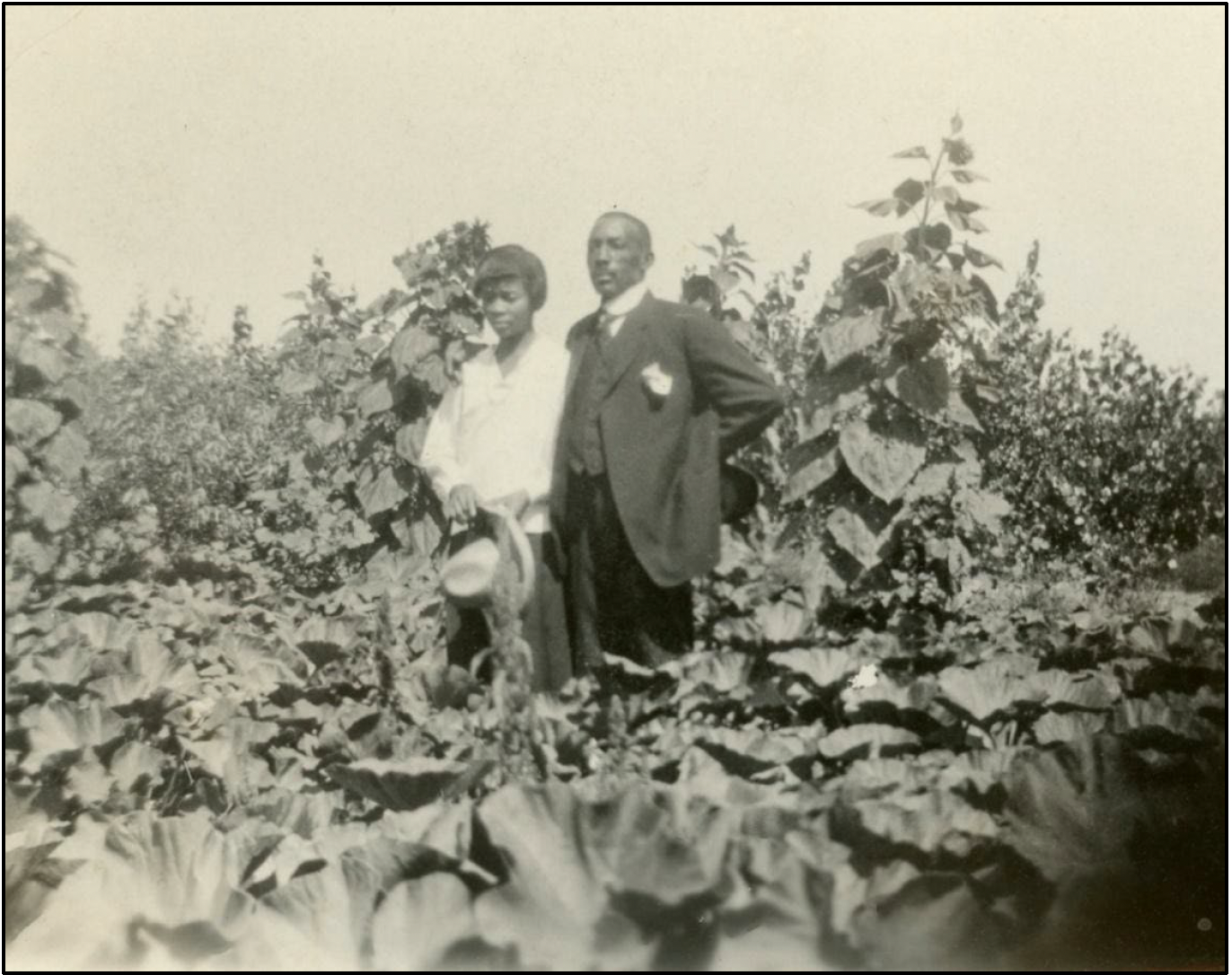
In 1912, Crawford started with a five-acre truck garden and one acre of corn — modest beginnings for what would become a substantial operation. By 1913, the farm had expanded to ten acres of corn, two acres of beans, and a three-acre truck garden. The following year, 30 acres of cultivation were underway. By 1914, a 25-acre corn crop was yielding 25 bushels per acre, alongside 1,800 pounds of potatoes, two tons of hay, and 500 pounds of beans.
Operations continued to diversify through 1916: two horses, four cows, four hogs, 32 chickens, and three domesticated turkeys joined the corn, barley, and truck garden. Ethel's home garden — which daughter Carrie called "the most beautiful garden in the world" — was the heart of the farm's produce. Wild turkeys were common on the land, and Ethel supplied much of Weld County with Thanksgiving turkeys each year.
In his final patent application of 1917, Crawford claimed: a farmhouse, cellar, straw barn, a 27-foot deep well, a wood-frame chicken house, a coal house, and a wire corn crib. The perimeter of the homestead was fully enclosed by wire fencing — remnants of which can still be seen today. Cream, eggs, turkeys, and produce were sold to John Thompson's Grocery Store in Denver, maintaining the economic lifeline between homestead and city.
On June 23, 1917, Crawford Hicks was granted full title to the 160-acre property.
Expansion and Community Anchoring
In 1919, the Hicks Homestead grew by 80 acres after the death of Carrie Jackson, whose daughter Clara Hicks deeded the east half of her own homestead to her sister-in-law, Ethel. The Crawford Hicks Homestead now encompassed 240 acres.
As described by descendant Tony Potts, "There were people on the perimeter of the Dearfield town site that supported the Dearfield Colony and made it successful. Those are the people who have been forgotten." The Hicks Homestead was exactly such a place — three miles east of the Dearfield townsite, it was the anchor of a wider agricultural belt that made the colony possible.
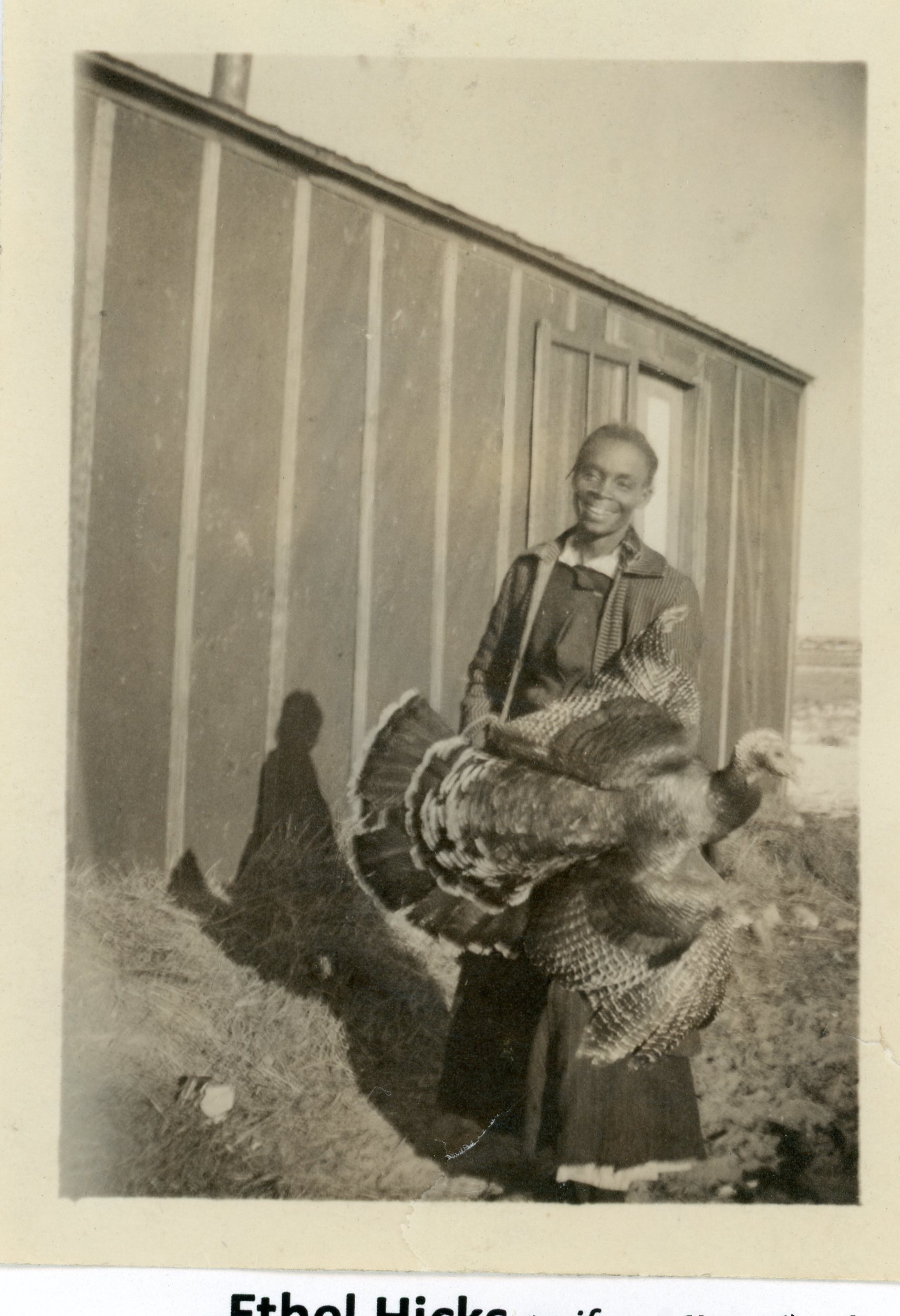
Ethel Hicks with turkey — she supplied Weld County each Thanksgiving
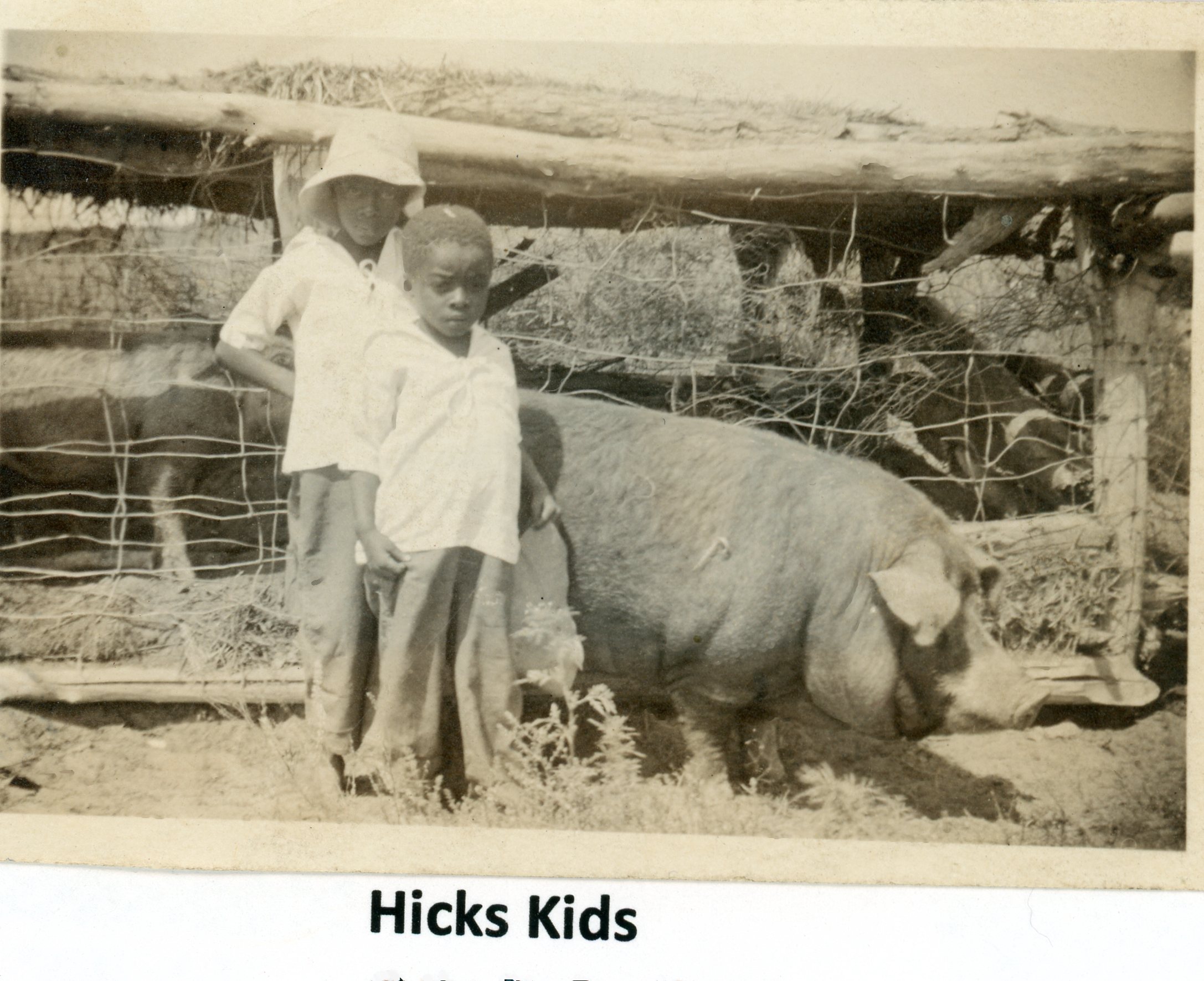
Hicks children at the farm — hogs were among the family's livestock
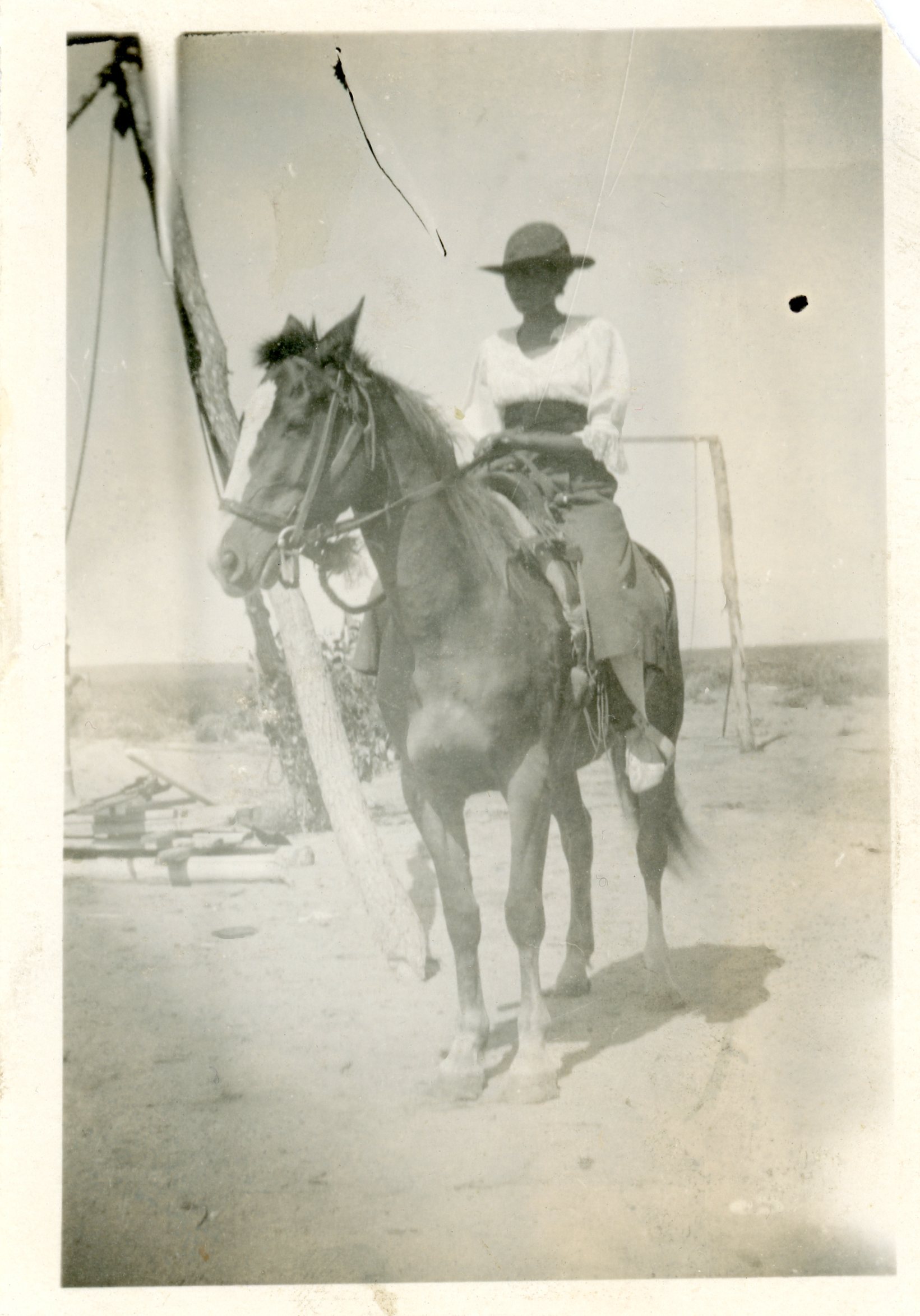
Horseback riding — horses were essential to farm operations
The Role of Hicks Women
African American women were significant drivers of Black cultural and economic life in the early 20th-century West. The women of the Hicks family are credited by descendants with the continuity and prosperity of the property through the present day. Ethel Hicks' leadership — in the garden, in the household, in Denver's civic organizations, and at the center of the Dearfield social network — was foundational.
"The women of the Hicks family are credited by their descendants with the continuity and prosperity of the property up through the present day," notes the historical record (Potts-Dixon personal communication, 2024). Their contributions — often unrecorded in official land patents or census entries — were equal to and essential alongside those of their husbands and brothers.
Site Integrity & Archaeological Significance
A 2024 archaeological survey recorded 17 features of the homestead. The Hicks Reservoir (or Pond) — a central component of the historic farm — remains extant. The surrounding land use is agricultural, preserving the integrity of setting and feeling. The mail-order farmhouse, though in poor condition, retains characteristics of the farmhouse type and style of its era.
The site retains a rich archaeological assemblage of domestic and agricultural artifacts that can provide information about the use of material culture by African Americans on the western frontier in the early 20th century. These materials speak to the economic complexity of the farmstead, the identity formation of an African American family and community, and the relationships between Dearfield settlers and both the Denver community and surrounding white farming families.
Overall, when considered comprehensively as a farmstead, the site retains high levels of integrity to convey the characteristics of an African American homestead in the early to mid-twentieth century.
Areas of Significance
The Hicks Homestead is associated with three aspects of African American history in Colorado:
Black Homesteading in the West
One of the last remaining examples of an African American homestead established under the Homestead Act of 1862 in Colorado.
The Dearfield Colony
A direct connection to the most significant African American agricultural settlement in Colorado's history.
The Hicks Family Legacy
Crawford and Ethel Hicks and their descendants represent over a century of African American life on Colorado's Front Range.
Area of Significance: ETHNIC HERITAGE: Black
Period of Significance: 1910–1973
Significant Dates: 1910, 1915, 1917, 1926, 1941, 1973
Cultural Affiliation: African American
Builder: Crawford Hicks (with Ethel Hicks)