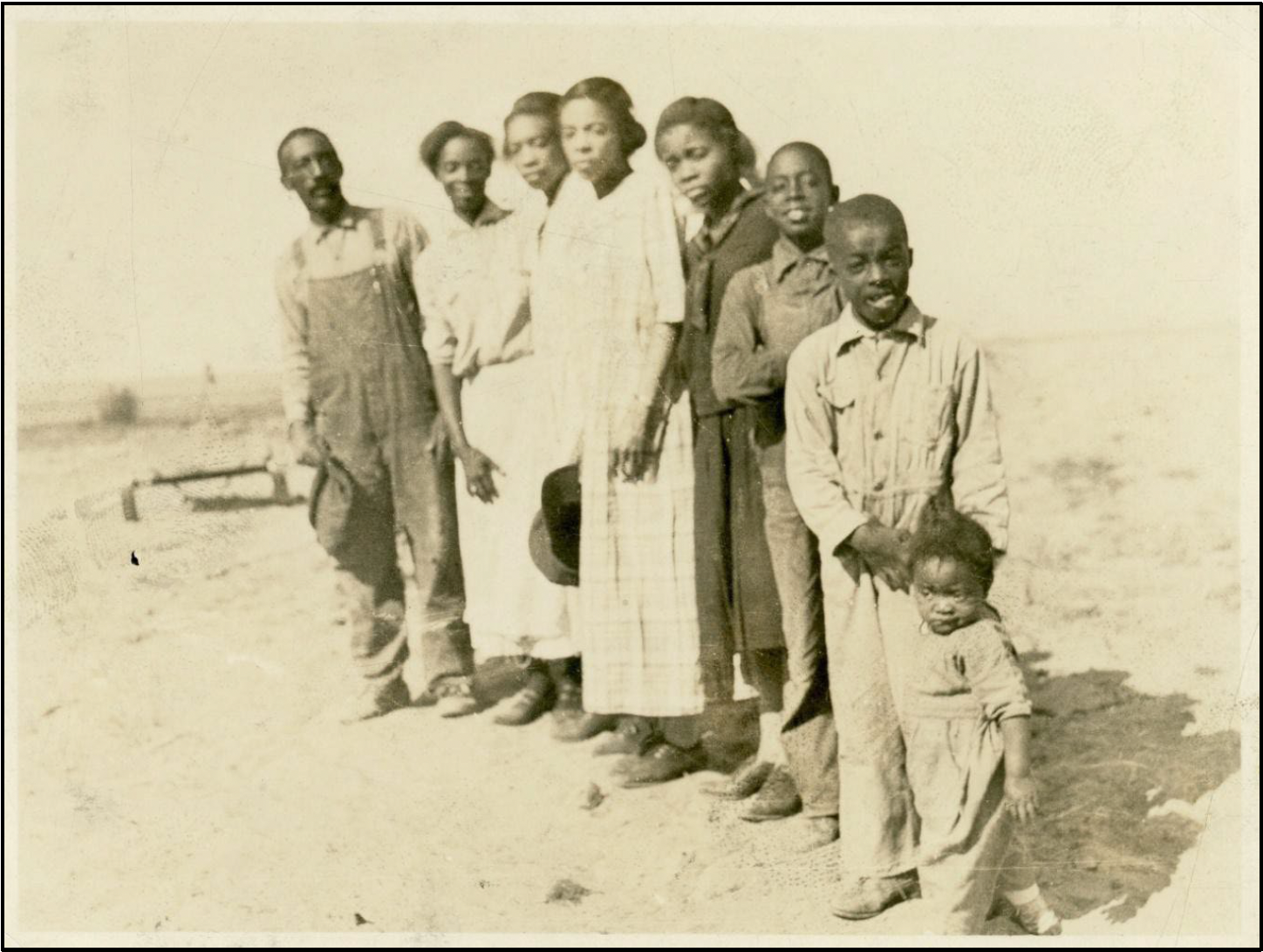
Crawford Hicks is Born
Crawford H. Hicks is born on March 15 in Wrightstown, Georgia. His father, Cornelius Hicks, works the railroad. His family participates in sharecropping — the prevailing labor system for African Americans in the rural post-Reconstruction South.
Ethel Mosley is Born
Ethel Mosley is born in Early County, Georgia. Her parents, Nancy and John Mosley, are listed as farmhands in the 1880 census. She will become Crawford's partner in life and in the extraordinary endeavor of building a homestead in the American West.
Crawford and Ethel Marry
Crawford Hicks and Ethel Mosley are married, beginning a partnership that will define both of their lives and the lives of five subsequent generations.
Carrie Lillian Hicks is Born
The Hicks' eldest child, Carrie Lillian, is born in Georgia. That same year, the family begins its westward migration — first to Alabama.
Eula Mae Hicks is Born
Eula Mae is born in Alabama during the family's migration through the South and toward California.
The Journey West
The Hicks family follows a common African American migration circuit: from Georgia to Alabama, then to Los Angeles, California — possibly influenced by Crawford's older brother Newton, who was in California by 1904. By 1909, the family has arrived in Colorado.
The Hicks Arrive in Colorado
The Hicks family settles in Denver. Crawford works as a janitor and later as a porter at Fish & Company. Two more children — daughter Esther and a son — are born in Colorado.
Dearfield Colony Founded
The Denver Star reports that O.T. Jackson and others have started a settlement on 20,000 acres of government land in Weld County, Colorado. Built on the ideals of Booker T. Washington, the settlement promises 'a new avenue for employment and self-help' for African Americans.
Crawford Hicks Files His Claim
Newspapers report that Crawford Hicks has filed on 160 acres of government land in Weld County, south of Masters, Colorado — among the first wave of homesteaders to respond to O.T. Jackson's call.
The House is Built
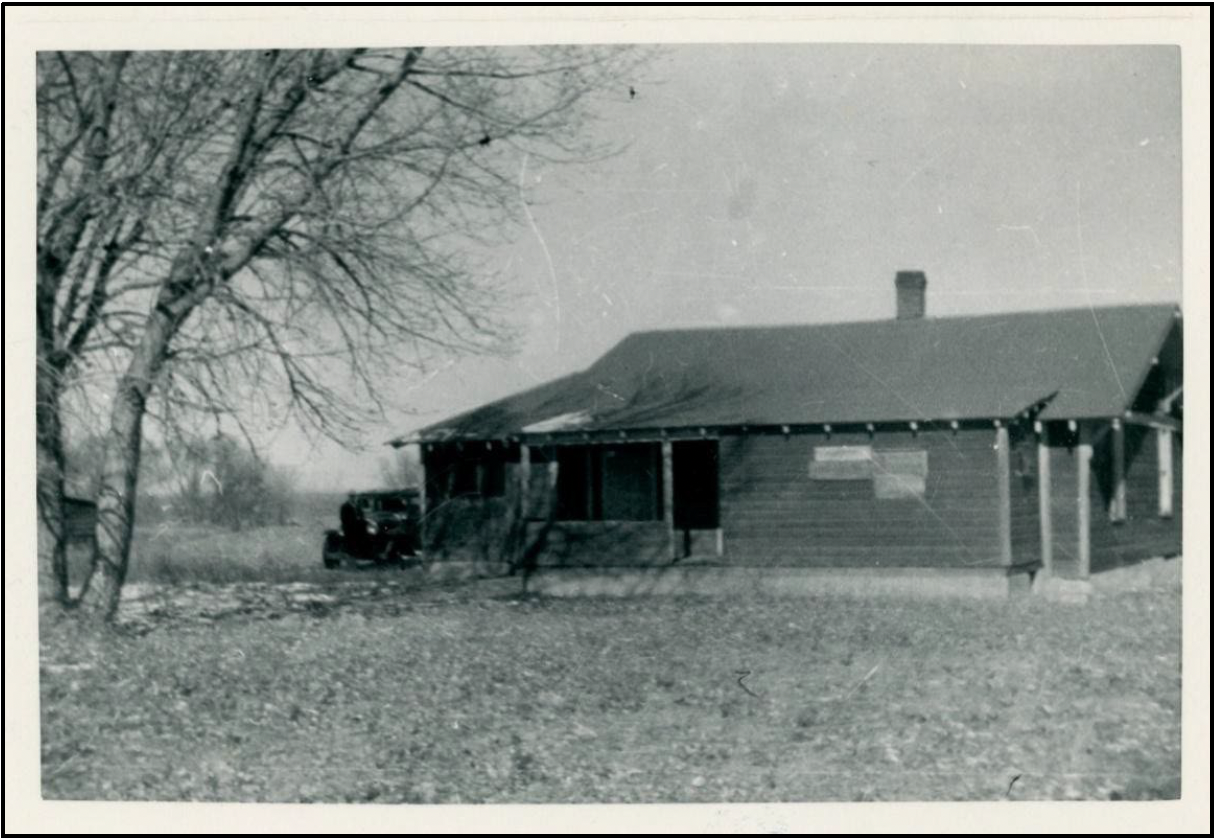
Crawford Hicks builds the family's six-room home himself, using a mail-order kit (most likely from the Aladdin Company) delivered by rail to the Masters station approximately two miles away. The house is oriented south, with two porches. Shortly after, Crawford encloses the front porch.
The Family Settles the Land
The Hicks family moves onto the Weld County property. Seven-year-old Carrie Hicks begins the childhood she will later recall with remarkable clarity. The family establishes a well, outhouse, corral, chicken coop, planted trees, and a boulevard of two rows of trees along the approach.
First Agricultural Records
Crawford reports a five-acre truck garden and one acre of corn — described as a poor year for the corn. Systematic documentation of the homestead's agricultural activities begins.
Farm Expansion
The farm grows to ten acres of corn, two acres of beans, and a three-acre truck garden. The corn yields about five bushels per acre; beans produce 200 pounds per acre.
Major Expansion
Thirty acres are now under cultivation. The 25-acre corn crop yields 25 bushels per acre. The farm produces 1,800 pounds of potatoes, two tons of hay, and 500 pounds of beans. Five acres of sod are added.
Christmas at the Hicks House
The Denver Star reports on holiday events at Dearfield. Mr. and Mrs. Crawford Hicks host Christmas dinner at their home on Christmas Day, cementing the house's reputation as the social heart of the Colony.
Livestock Diversification
The family adds two horses, four cows, four hogs, 32 chickens, and three domesticated turkeys. All cultivation remains on the eastern half of the property.
Crawford Receives Full Title
After seven years of improving the land and meeting Homestead Act requirements, Crawford Hicks is granted full title to his 160-acre property. In his final patent application, he claims a farmhouse, cellar, straw barn, 27-foot-deep well, chicken house, coal house, and wire corn crib.
Dearfield at its Peak
The Denver Star reports that over 60 African American families have homesteaded more than 15,000 acres of the 30,000 identified for the Dearfield Colony. Crawford Hicks is listed among the homesteaders. The colony is at its zenith.
Carrie Hosts a Fishing Party
The Denver Star reports that Carrie Hicks hosted 'Miss Lucille Polk' at the homestead, entertaining her with a fishing party at the Hicks Pond and a farewell gathering — evidence of the homestead's active social calendar and its connection to Denver's Black community.
Taka Club Meets at Dearfield
The Denver Star announces that the Taka Art and Literary Club — part of the Denver Federation of Colored Women — will hold its meeting at the home of Mrs. Ethel Hicks at Dearfield. This illustrates the deep network between the homestead and Denver's African American civic leadership.
Homestead Expands to 240 Acres
After the death of Carrie Jackson, her daughter Clara Hicks deeds the east half of her homestead to Ethel Hicks. The Crawford Hicks Homestead now encompasses 240 acres.
The Hicks Navigate Two Worlds
The 1920 census captures the family's dual life: first enumerated at their Denver rental on East 26th Avenue, then recorded one month later in Weld County as independent farmers who own their home. This balance between city and farm would define the family for decades.
Dearfield Begins to Decline
Drought returns and the rains that had sustained the Colony's early years cease. Federal land policies disadvantage small owner-operators. The post-World War I agricultural depression deepens. Many Dearfield families begin leaving for Denver or other communities.
Crawford Hicks Dies
Crawford Hicks passes away, ending the initial phase of Hicks family homesteading in Weld County. His brother Newton dies eight months later. After 1926, no Hicks family member will live in Dearfield year-round — but the family's ownership of the land continues.
Ethel Supports the NAACP
Ethel Hicks is listed among nine contributors to a Denver NAACP defense fund supporting 'the segregation fight that has been forced upon us.' Her activism in Denver's African American civic life continues and deepens.
Dearfield Becomes a Ghost Town
By the 1930 census, Dearfield has lost more than 70% of its African American inhabitants. The Great Depression and Dust Bowl accelerate the decline. Only 10 households and 25 residents remain. The Hicks family is among the very few who continue to hold their land.
Walter Wood and the Homestead
Carrie's husband, Walter Wood, begins guiding fishing and hunting excursions on the property, establishing it as a recreational destination. The family builds a life primarily in Denver while maintaining deep ties to Weld County.
Eula Hicks Dies
Eula Mae Hicks, second daughter of Crawford and Ethel, passes away. Her death is marked in the records of Denver's Shorter AME Church, of which Ethel was a leading member.
Carrie and Walter in Denver Society
Carrie and Walter Wood host national YWCA conference delegates at their 'palatial new home, 2217 High Street' in Denver. The family is now established in Denver's African American professional class while maintaining their bond to the Weld County homestead.
Ethel Deeds the Land to Walter Wood
Ethel Hicks transfers the original 160-acre homestead to Walter Wood, recognizing his role as its most active steward. Ethel retains the portion originally homesteaded by Carrie Jackson and continues to lease some acreage for oil and gas.
Esther Leads the NAACP Youth Division
Esther Hicks — daughter of Crawford and Ethel — is identified as a leader of the local NAACP youth division, continuing the family's multi-generational commitment to civil rights.
Walter Wood Dies — An Era Ends
Walter Wood, the last full-time resident of the Hicks Homestead, passes away. His death marks the end of the property's period of significance as an actively farmed homestead — though the family continues to own and use the land for hunting, fishing, and recreation.
Carrie Hicks Wood's Oral History
Carrie Hicks Wood — Crawford and Ethel's eldest daughter, then approximately 91 years old — gives a landmark oral history interview in Denver. Her vivid account of life at the homestead becomes the primary firsthand testimony of the Dearfield Colony's homesteading experience.
Archaeological Survey — 17 Features Recorded
A comprehensive archaeological survey of the Hicks Homestead records 17 distinct historic features, including the Hicks Reservoir, remains of fencing, structural foundations, and agricultural infrastructure. The survey confirms the site's exceptional integrity and historical significance.
Hicks Homestead House Listed on Colorado State Register
The Hicks Homestead House is listed on the Colorado State Register of Historic Properties — the only known surviving homestead family home from the Dearfield Colony and an irreplaceable piece of Colorado's African American history. This designation reflects the efforts of the Hicks family descendants and historians who have worked to ensure this story is not forgotten.
Six Generations, One Legacy
The Hicks family — now six generations strong, with 13 children in the youngest — continues to own and cherish the Weld County property. The homestead serves as a recreational and educational space, a gathering place for family, and a living monument to what Crawford and Ethel Hicks built over a century ago.
Three Eras of the Hicks Homestead
The Dearfield Era
The founding generation. Crawford and Ethel Hicks build their home from a mail-order kit, establish a thriving farm, raise their four children on the land, and become the social hub of the Dearfield Colony. Booker T. Washington Jr. sleeps in their home. Their farm produces corn, beans, potatoes, turkeys, dairy, and vegetables sold in Denver. Crawford patents the land in 1917. He dies in 1926.
The Denver Era
Ethel and her children balance life in Denver with continued ownership and use of the Weld County homestead. The family becomes part of Denver's African American professional class — active in the NAACP, YWCA, sororities, churches — while Walter Wood keeps the farm alive. The property transitions to recreational use: hunting, fishing, and family gatherings.
The Legacy Era
Walter Wood dies in 1973, ending active farming. The Hicks family descendants — now in the fifth and sixth generations — continue to hold the land and use it for recreation and family connection. Historians and archaeologists recognize the property's extraordinary significance. The house is listed on the Colorado State Register of Historic Properties. Preservation efforts begin.