Why This House Matters
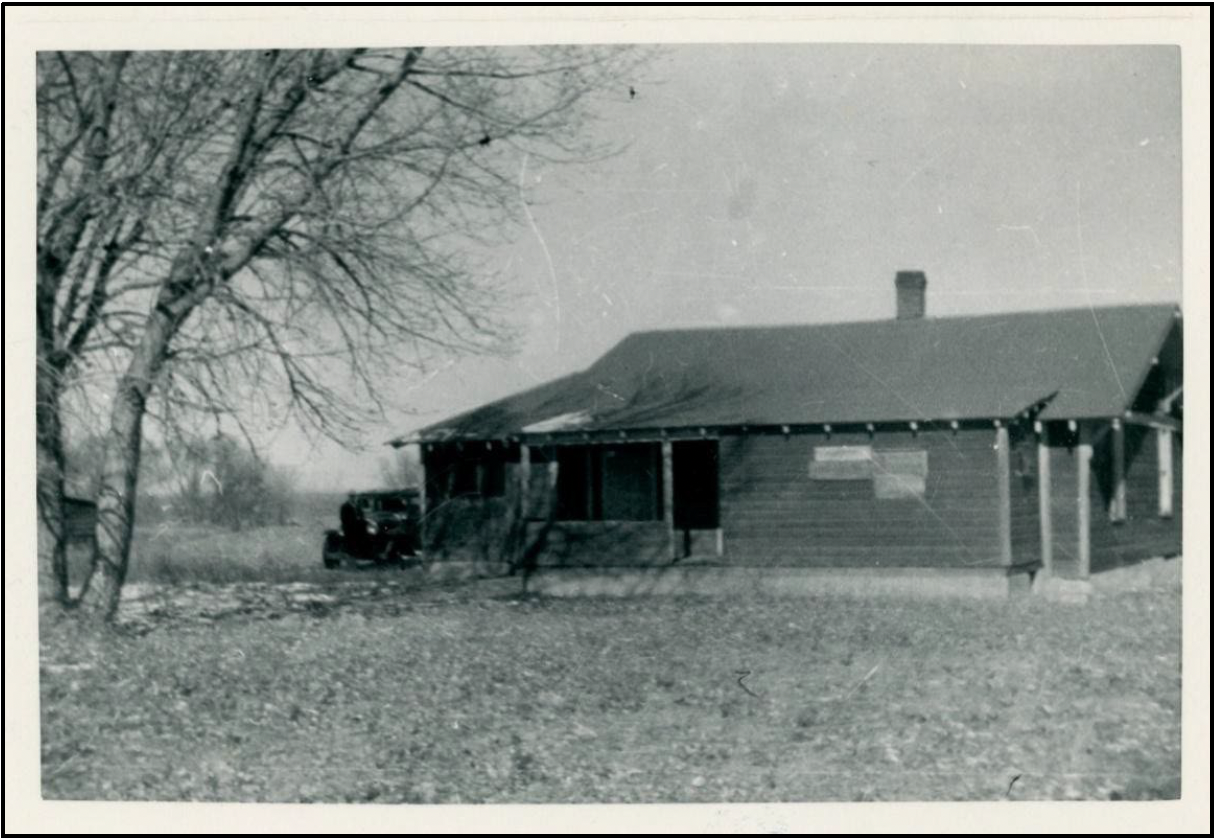
The Hicks Homestead House is a rare example of an African American homestead house in the American West, and the property is associated with events that have made a significant contribution to history. Of the three recorded extant buildings from the entire African American settlement period (1910–1930) at the Dearfield Colony, the Hicks Homestead House is the oldest and only one built as a family home.
The three surviving structures from the Dearfield settlement period are:
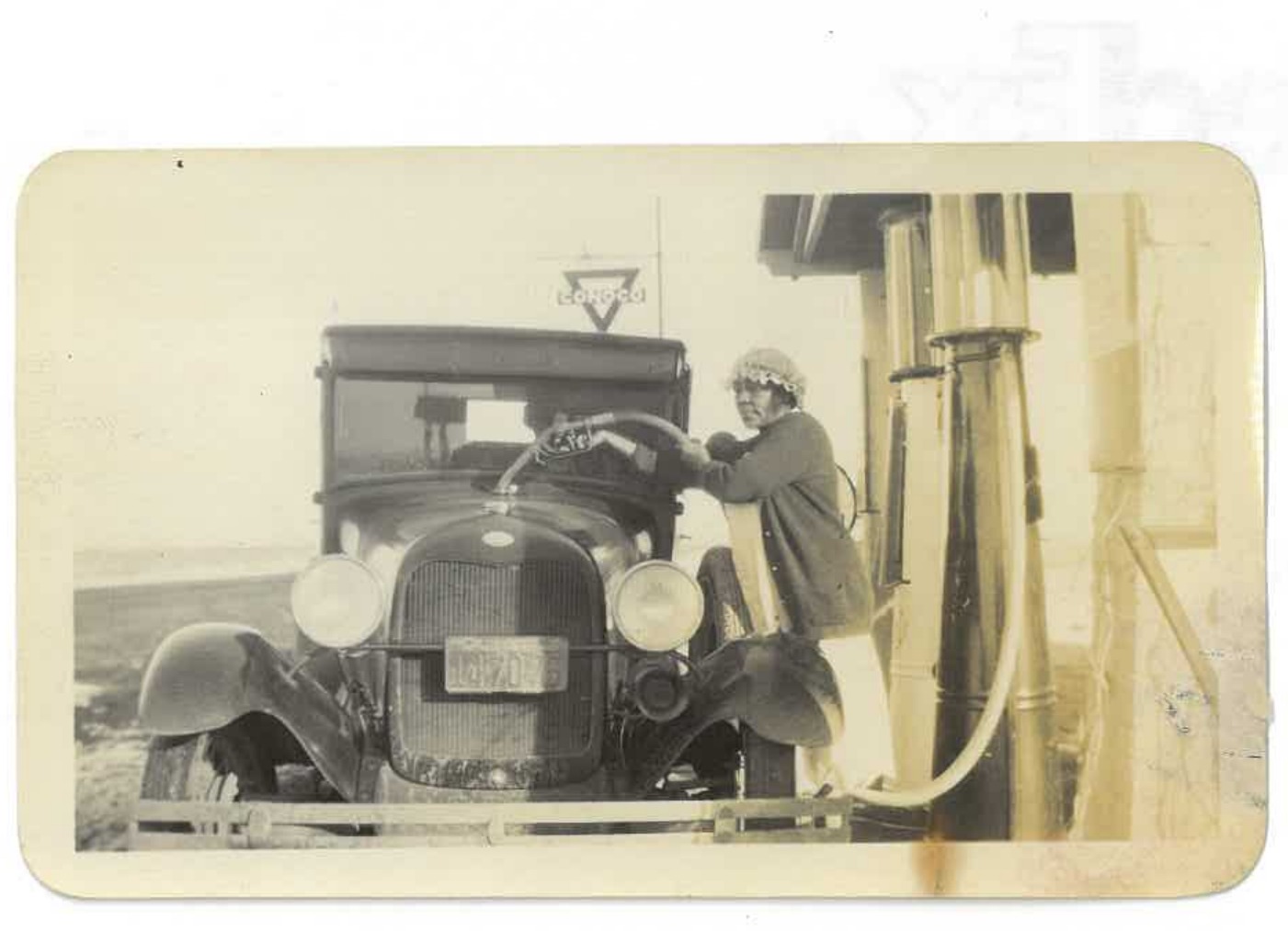
The Dearfield Colony stretched over four miles north to south and more than six miles west to east. The townsite buildings only account for a small portion of the original homesteading experience — they document those who settled small commercial lots, not the 160-acre farming families who were the backbone of the colony. The Hicks Homestead House is the only remaining structure that tells that story.
Colorado had two large-scale African American agricultural settlements: the Dearfield Colony in the northeast and The Dry in southeastern Colorado. The Dry has no extant resources from the settlement period whatsoever. This means the Hicks Homestead House is the only known surviving example of an African American family home from either Colorado settlement — and likely from any comparable settlement in the entire region.
The House: Construction and Design
Crawford Hicks built the house himself from a mail-order kit, most likely from the Aladdin Company — a well-established supplier of rural homes in the burgeoning American West, predating the better-known Sears & Roebuck catalog homes. Aladdin offered homes that were more simply constructed than the bungalows and craftsman cottages of their competitors, making them accessible to working families.
The kit was delivered by rail to the nearby town of Masters — a small railroad stop now no longer present, located approximately two miles north of the property at what is today the intersection of Road 87 and Highway 34. Crawford hauled the materials to the property and assembled the house himself.
The finished structure included six rooms and two porches, oriented facing south. Shortly after completion, Crawford enclosed the main front porch, creating a sheltered enclosure on the southeast corner. The six-room house was among the largest in the Dearfield settlement — a fact that made it the natural social hub of the community.
The family was living on the property by the end of 1910. Carrie Hicks Wood, Crawford and Ethel's eldest daughter, began her life there at age seven and recalled it fondly in a 1994 oral history interview.
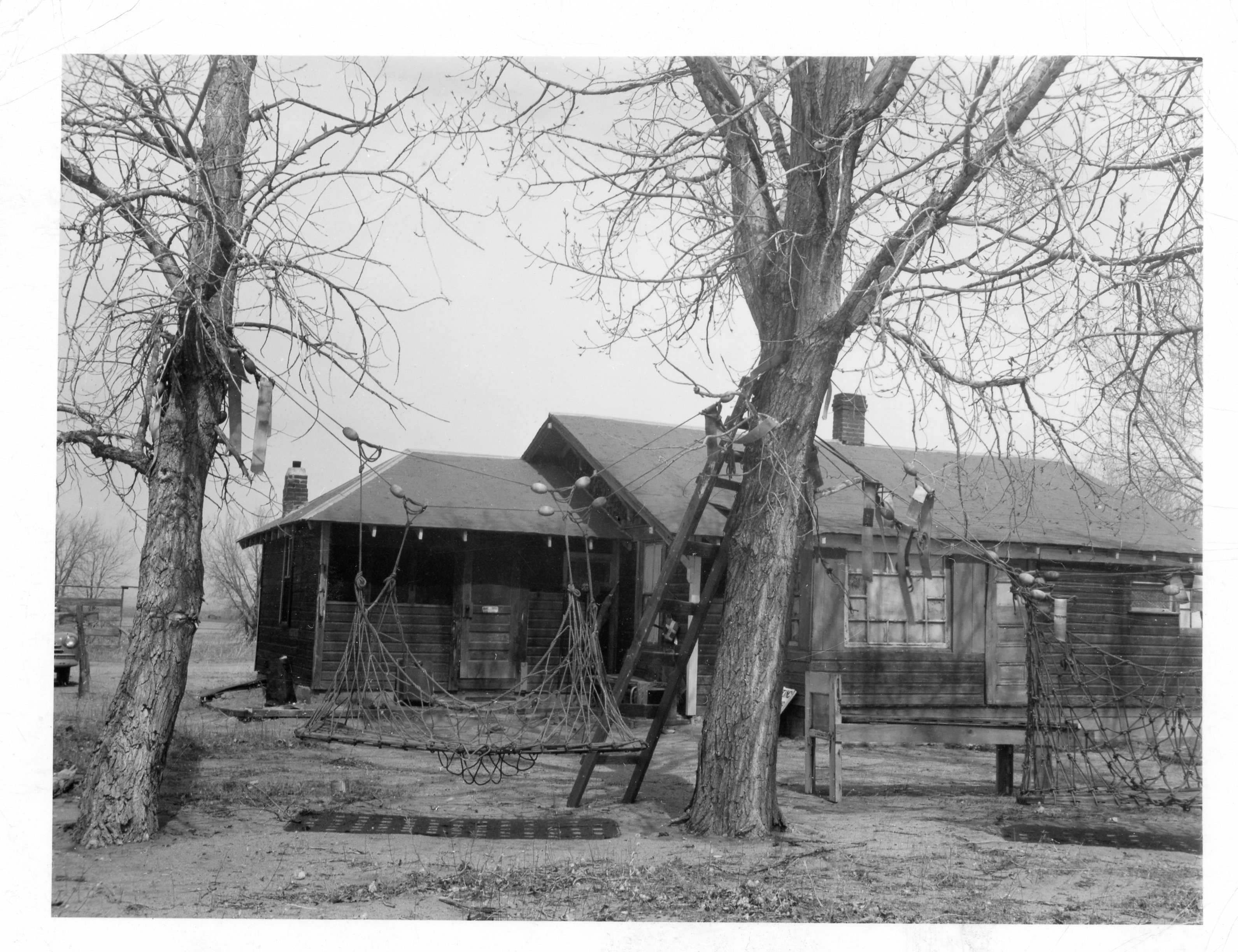
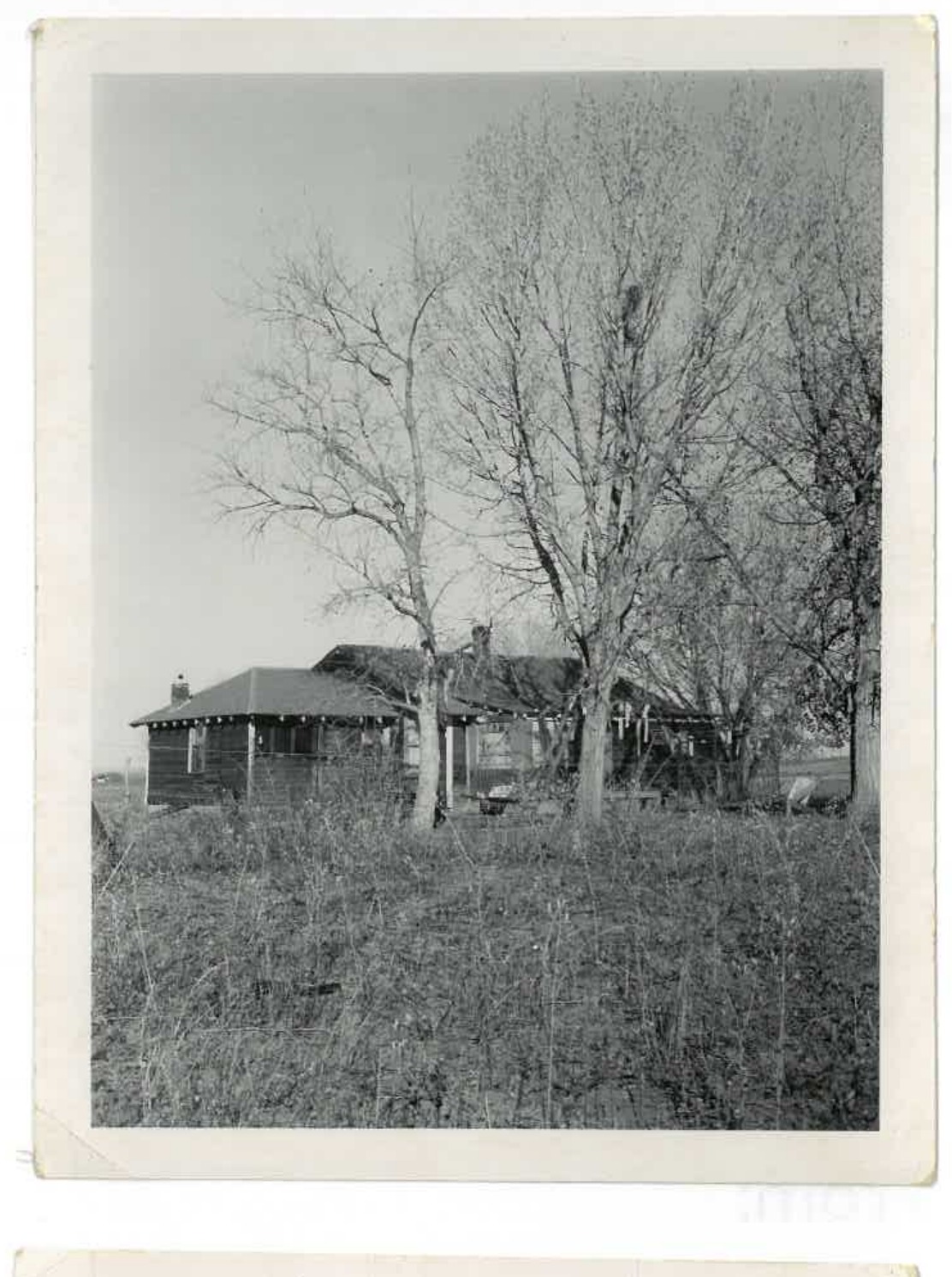
The Hicks Homestead House surrounded by the trees planted by the family
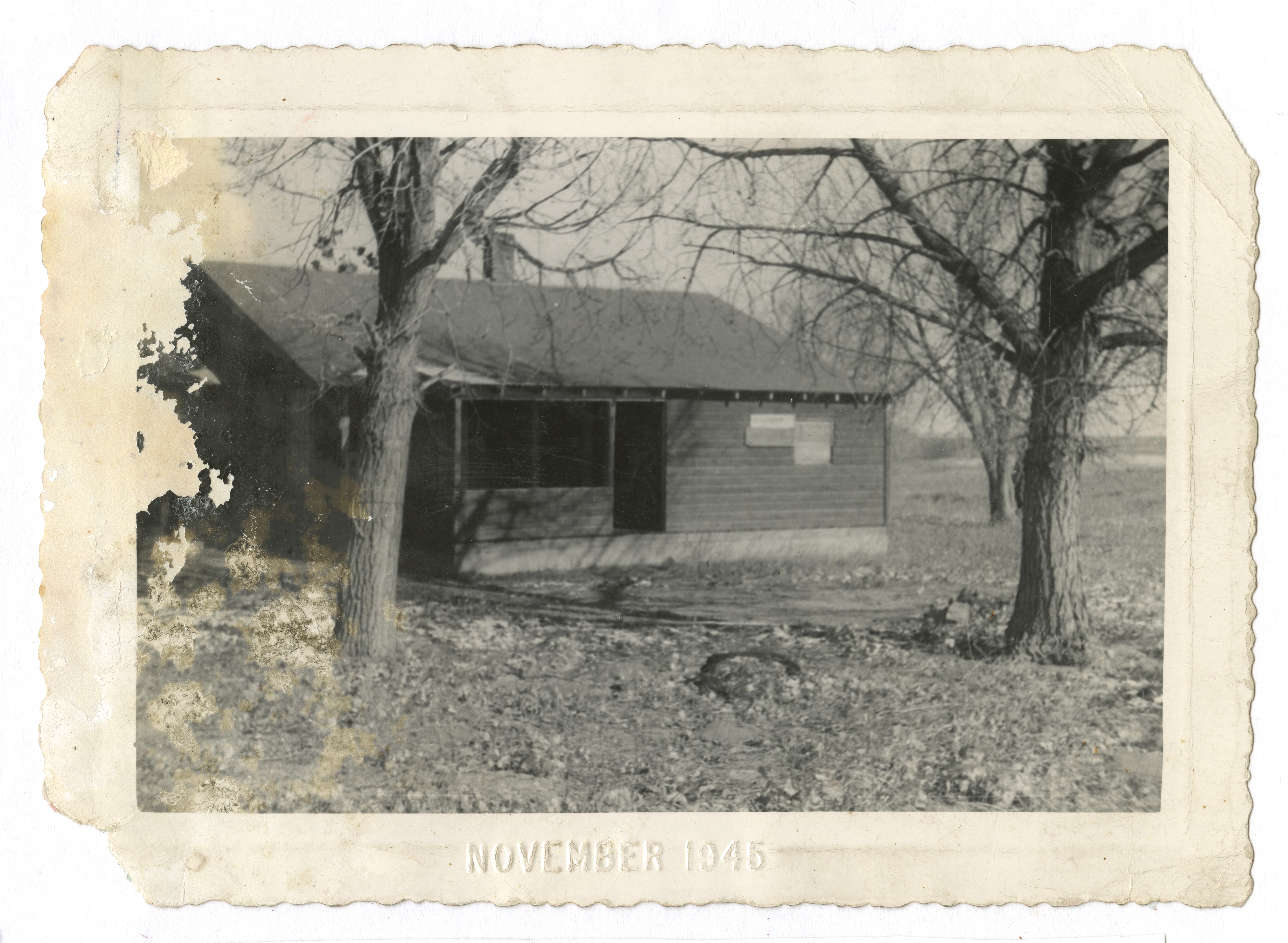
The homestead, November 1945 — still standing after 35 years
Life at the Hicks House
The house was not just a dwelling — it was a community institution. O.T. Jackson relied on the Hicks home as the setting for welcoming important visitors to Dearfield. The Crawford house hosted Booker T. Washington Jr., son of the celebrated civil rights leader and educator, during his Colorado tour. Christmas dinners, social club meetings, and community gatherings regularly filled its six rooms.
The Denver Star — an African American newspaper distributed in five states across the intermountain West — regularly reported on social events at the Hicks home. In July 1917, Carrie Hicks hosted "Miss Lucille Polk" at the homestead, entertaining her with a fishing party at the Hicks Pond and a farewell gathering. In 1918, the Taka Art and Literary Club held its meeting there.
The children of the Hicks family attended school in Masters — the only Black children in a predominantly white school. Carrie Hicks Wood remembered: "The little kids were mean in school. It wasn't very agreeable. We were often left out of games and activities. If they drew sides, we were the last ones picked, and if they had enough, they wouldn't pick us at all. My sister and I would sit on the steps. I was a person who could always adjust. I expected it."
Yet within the homestead, life held real joy. The children fished in the property's lake, helped in the garden, and worked the farm alongside their parents. Carrie remembered simply: "I didn't know anything else, and as far as I was concerned, I was happy out there."
Continuity Through Five Generations
The Hicks family and their descendants resided in the house for over 60 years. While some family members relocated to Denver's Whittier neighborhood in the 1920s, the homestead always had a Hicks family presence. Walter Wood, husband of Carrie Hicks, remained the last full-time resident, managing the property until his death in 1973 — marking the close of the homestead's active agricultural era.
Since then, the house has been vacant — but the property has not been abandoned. The Hicks family descendants continue to use the land for hunting, fishing, and outdoor recreation. The sixth generation of the Hicks family, numbering 13 children, now carries the legacy forward.
The Hicks descendants are one of the few remaining African American landowner families in the area with direct ties to the Dearfield Colony. As Jeannie Potts Dixon reflected: "The human value — not economic value — associated with land ownership is placed in the continued development of the land."
Colorado State Register of Historic Properties
The Hicks Homestead House is listed on the Colorado State Register of Historic Properties. This designation recognizes the property's exceptional significance to African American history, Colorado history, and the history of westward migration and homesteading in the United States. The period of significance is 1910 to 1995.
The Hicks Homestead House is a unique and rare example of a family's home from the African American agricultural settlement period — the only known remaining house of its kind in Colorado.